Invisalign vs Braces: Choosing an Orthodontic Approach
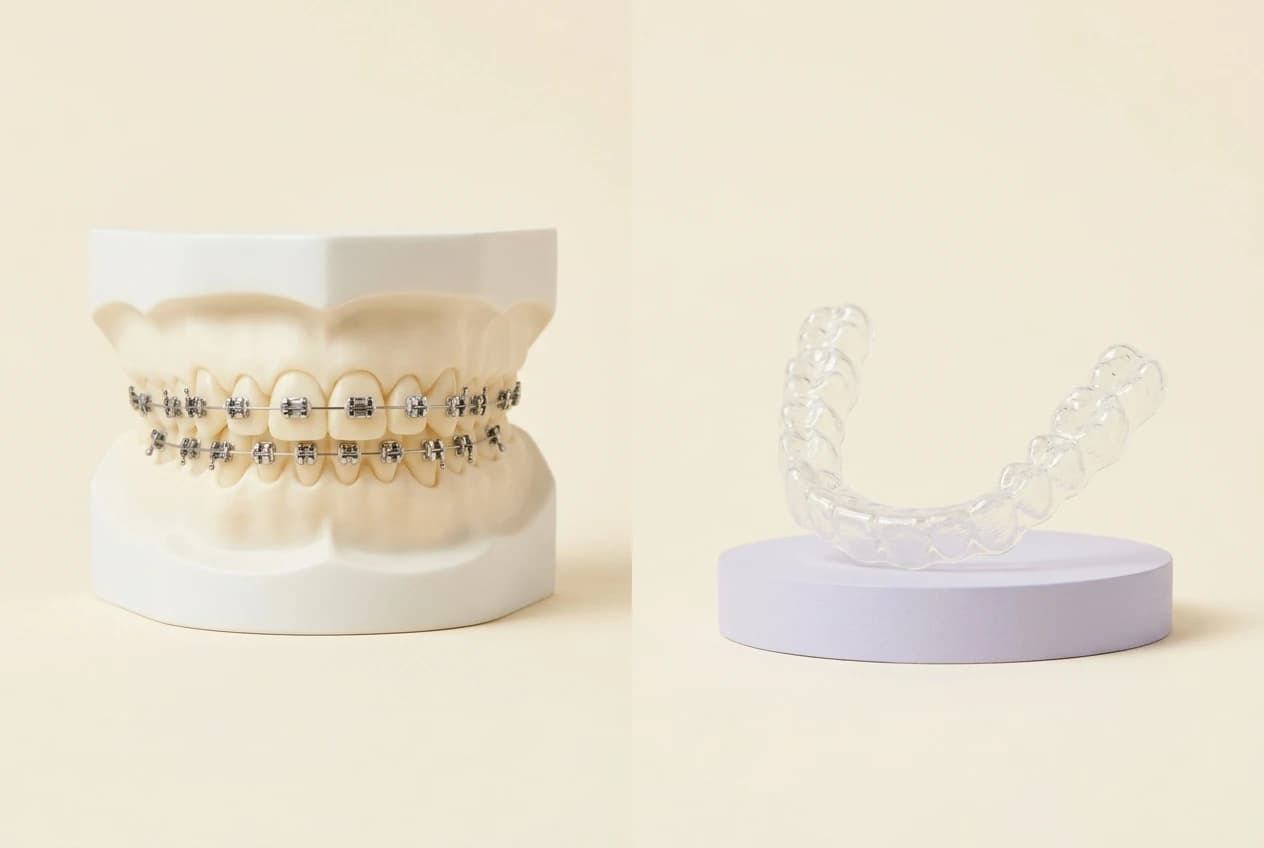
When evaluating Invisalign vs braces, patients compare removable clear aligners with doctor-controlled fixed appliances to determine the best approach for correcting malocclusion, maintaining oral hygiene, and matching their personal lifestyle.
Short Answer
Short Answer
Choosing Invisalign vs braces depends on the movements your teeth need, your bite, oral health and daily habits. Invisalign uses removable clear aligners, while braces stay attached. Neither is the best option for everyone. An orthodontist can compare suitable approaches, their limitations and the care each requires.[1][5]
Understanding clear aligners and fixed appliances
Invisalign and traditional braces are distinct orthodontic systems designed to move teeth into healthier positions. While braces bond directly to enamel to guide tooth roots, Invisalign uses custom-molded clear trays that fit over the teeth, providing a removable alternative for targeted alignment corrections.[1][5]
How clear aligner therapy operates
Clear aligners use a series of custom-made clear plastic trays to move teeth gradually. Small tooth-colored attachments may be bonded to selected teeth to help the trays apply force. The movements achievable with aligners vary by case; attachments do not make every movement equally predictable.[1][5]
How fixed braces apply continuous force
Fixed braces use brackets bonded to the teeth and connected by wires. The orthodontist adjusts the system to guide planned movements. Braces remain in place between visits, but still require careful cleaning, appointments and sometimes elastics. Significant jaw differences may need additional treatment beyond braces alone.[1]
Comparison criteria for choosing an orthodontic system
Selecting between clear aligners and fixed brackets involves examining appliance biomechanics, routine compliance demands, and case complexity. Each method addresses dental misalignment effectively, yet their structural differences influence daily lifestyle, speech adaptation, and the overall clinical approach required to achieve optimal oral function.[1][5]
Patient compliance and daily wear protocols
Aligners need consistent wear: commonly 20 to 22 hours a day, or as prescribed by your orthodontist. Follow the prescribed tray sequence. Braces stay attached, but they still require daily care, appointments and any prescribed elastic wear.[1][5]
Malocclusion severity and appliance suitability
An orthodontist assesses crowding, spacing, the bite and the movements needed before recommending an appliance. Some situations are better suited to one approach or require additional treatment. Clear aligners and braces both have limits; the choice should follow an examination and discussion of your individual goals.[1][5]

Functional signs that warrant an orthodontic evaluation
An orthodontic assessment identifies alignment and bite concerns and helps determine whether braces or aligners suit your needs. Discuss any difficulty chewing or unusual tooth wear, along with your goals. Examination and treatment planning do not themselves prevent future dental problems.[1][5]
Recognizing malocclusion and functional limitations
Crowding, gaps or concerns about how the teeth meet are reasons to discuss an orthodontic evaluation. Describe chewing difficulties or other symptoms during the consultation. Your orthodontist can explain which concerns an appliance may address and whether you need other dental assessment.[1][5]
How an orthodontist evaluates alignment needs
Your orthodontist examines the teeth and bite and decides which records, such as photographs, scans or X-rays, are needed. These findings guide diagnosis and a treatment plan. Ask what each proposed record will help assess and how it affects your options.[1][5]
The importance of in-person specialist supervision
Professional assessment and monitoring help identify concerns as treatment progresses. Your orthodontist checks tooth movement, the bite and oral health and may revise the plan when needed. Monitoring helps manage risk but does not remove every possibility of problems, so ask about risks specific to your case.[1][5]
Comparing daily comfort and dietary flexibility
Every orthodontic modality presents unique day-to-day tradeoffs regarding soft-tissue comfort, physical appearance, and dietary freedom. Understanding how each appliance interacts with oral structures helps individuals select an option that accommodates their professional environments, athletic pursuits, and personal preferences without compromising clinical goals.[1]
Managing initial discomfort and soft-tissue irritation
Both aligners and braces can cause temporary soreness or irritation as you adapt. How they feel varies between people and treatment stages. Discuss comfort measures with your orthodontist, and report persistent or worsening pain rather than assuming it is a normal part of tooth movement.[1][4]
Navigating dietary restrictions and meal routines
Removing aligners for meals allows fewer food restrictions than fixed braces. Follow any advice for your teeth and attachments. With braces, avoid foods your orthodontist identifies as likely to damage brackets or wires, including hard or sticky items.[1]
The clinical progression of orthodontic care
Undergoing orthodontic treatment follows an organized sequence of clinical planning, active appliance wear, and scheduled progress checks. Whether using clear aligners or fixed brackets, the orthodontist guides the biological movement of teeth systematically to establish a harmonious relationship between the dental arches.[1][5]
Steps during active treatment and tray transitions
Treatment includes fitting the appliance, following the prescribed wear or adjustment plan, and attending progress checks. Ask how the team will assess movement and decide whether changes are needed.[1][5]
- An examination and appropriate records inform the treatment plan.
- The orthodontist fits braces or provides aligners, with attachments when needed.
- Follow the prescribed aligner sequence or attend scheduled braces adjustments.
- Progress checks help the team assess movement and discuss concerns.
Handling non-urgent appliance maintenance needs
Contact your orthodontist if an aligner is lost, damaged or poorly fitting, an attachment comes off, or a bracket loosens. Ask which tray to wear while awaiting advice. Do not continue wearing an appliance that is sharp, painful or badly distorted.[4][5]

Oral hygiene maintenance and long-term retention
Daily tooth and appliance cleaning helps limit plaque-related problems. After active treatment, retainers help maintain tooth positions. Your orthodontist explains the wear schedule and what to do if a retainer no longer fits.[1][3]
Preventing periodontal inflammation and enamel demineralization
Removing aligners gives you access for ordinary brushing and flossing. Braces may require a floss threader or other tools to clean around wires. Both approaches need consistent tooth and appliance care. Ask for a demonstration and tell your dental team about areas you cannot clean effectively.[3]
Securing results through lifelong retainer wear
Teeth can shift after either type of treatment. Retainers help maintain their positions, and your orthodontist will explain the appliance and wear schedule appropriate for you. Contact the team if a retainer is lost, damaged or no longer fits. Retention helps reduce movement without guaranteeing permanent stability.[1][4]
Clinical limitations and making an informed choice
Both orthodontic modalities possess specific biological boundaries, and an improper choice can lead to prolonged treatment times or compromised bite stability. Consulting an orthodontist allows you to evaluate clinical diagnostic findings alongside lifestyle demands, creating a clear pathway toward a healthy, properly functioning smile.[1][5]
Partnering with your general dental provider
Continue examinations and professional cleanings with your general dentist throughout orthodontic treatment. Your dentist sets the interval based on your oral health and risk factors. Tell both teams about fillings, gum treatment or other dental work so they can discuss how to coordinate appointments.[3]
Sources
- Aligners vs. Braces: A Comparison — American Association of Orthodontists
- Foreign object - swallowed — MedlinePlus, National Library of Medicine
- Living With Braces: The Brace-Faced Adventure — American Association of Orthodontists
- What is an Orthodontic Emergency and How Do You Handle Them? — American Association of Orthodontists
- Clear Aligner Therapy: The Discreet Way to Straighten Teeth — American Association of Orthodontists
Common questions
Frequently asked questions
You remove aligners before meals, so they do not impose the same food restrictions as fixed braces. However, your teeth, attachments or other dental conditions may still need care. Follow your clinician’s advice, and clean your teeth and trays as instructed before putting the aligners back in.[1]
Start your smile journey with PhD Orthodontics
To explore whether Invisalign or traditional braces fit your orthodontic needs, schedule a consultation with PhD Orthodontics to discuss your personalized treatment options.